Amniotic Fluid Stem Cell Therapy: A Comprehensive Patient Guide
Introduction
Amniotic fluid stem cell therapy has become an increasingly discussed option in regenerative medicine due to its unique biological composition, strong safety profile, and wide range of clinical applications.
This educational guide is based on insights shared by Dr. David Green, Educational Director of and founder of R3 Stem Cell.
Although unfamiliar to some patients, amniotic fluid has been used hundreds of thousands of times worldwide across wound care, orthopedic surgery, ophthalmology, and regenerative applications. Ongoing research continues to expand our understanding of its therapeutic potential.
What Is Amniotic Fluid?
Amniotic fluid is the natural substance that surrounds a fetus during pregnancy. Its primary biological roles include:
Cushioning and protecting the fetus
Supporting growth and tissue development
Preventing infection
From a medical standpoint, amniotic fluid contains a powerful combination of biologically active components that make it valuable in regenerative therapies. Its clinical use dates back to the 1930s, particularly in wound care for non-healing ulcers.
Key Biological Components of Amniotic Fluid
Growth Factors
Amniotic fluid contains approximately 80 to 120 growth factors, which are signaling proteins that help coordinate tissue repair and regeneration.
For perspective:
Platelet-rich plasma therapy typically contains about 7 growth factors
Amniotic fluid contains more than 10 times that amount
Preventing infection
This high concentration helps explain its observed effects in:
Chronic non-healing wounds
Torn or degenerated tendons and ligaments
Cartilage damage and joint degeneration
Stem Cells
Amniotic fluid contains a high concentration of multipotent stem cells, often greater than what can be harvested from adult bone marrow.
These cells are frequently described as a hybrid stem cell population, meaning:
They are not embryonic stem cells
They are not fully adult stem cells
They retain broad differentiation potential without ethical concerns
Scientific literature shows these cells can differentiate into bone, cartilage, muscle, nerve, and other tissue types, which supports their study in regenerative medicine.
Importantly, amniotic stem cells do not form tumors in experimental models, a key safety advantage compared to embryonic stem cells.
Hyaluronic Acid
Amniotic fluid naturally contains hyaluronic acid, a critical component of healthy joints.
Hyaluronic acid:
Acts as joint lubrication
Reduces friction between cartilage surfaces
Helps decrease pain and slow degeneration
This is the same substance found in commonly used arthritis injections.
Hyaluronic Acid
Amniotic fluid contains antimicrobial factors that protect the fetus from infection. Clinically, this translates into a very low incidence of infection when used therapeutically.
10 Major Benefits of Amniotic Fluid Therapy
Immunologically privileged with no rejection reaction
High concentration of multipotent stem cells
Hybrid stem cell population without ethical issues
Rich in hyaluronic acid for joint lubrication
Contains a full complement of growth factors
Anti-inflammatory properties
Anti-adhesion qualities that help prevent scar tissue
Antimicrobial protection
Ethically sourced and readily available
Broad applicability across many medical conditions
Ethical Considerations
Amniotic fluid therapy raises no ethical concerns.
The fetus is never touched or harmed
Amniotic fluid and placenta are normally discarded after birth
Donors are fully consented and compensated
No embryonic or fetal tissue is used
Modern regenerative medicine no longer requires fetal stem cells to achieve clinical effectiveness.
How Amniotic Fluid Is Collected, Processed, and Stored
Collection
Amniotic fluid used for therapy is collected during scheduled C-sections, not through amniocentesis.
The baby is delivered safely
The fluid is collected after birth
There is no added risk to mother or child
Processing
Processed in FDA regulated laboratories
Tested for infectious diseases
Prepared under strict tissue banking standards
Many facilities are certified by the American Association of Tissue Banks
Storage and Transport
Cryogenically frozen between -42 and -80 degrees Celsius
Stored in cryogenic freezers
Shipped on dry ice
Thawed for approximately 5 to 10 minutes prior to use
How Amniotic Fluid Therapy Is Administered
Amniotic tissue is available in multiple formats.
Liquid Form
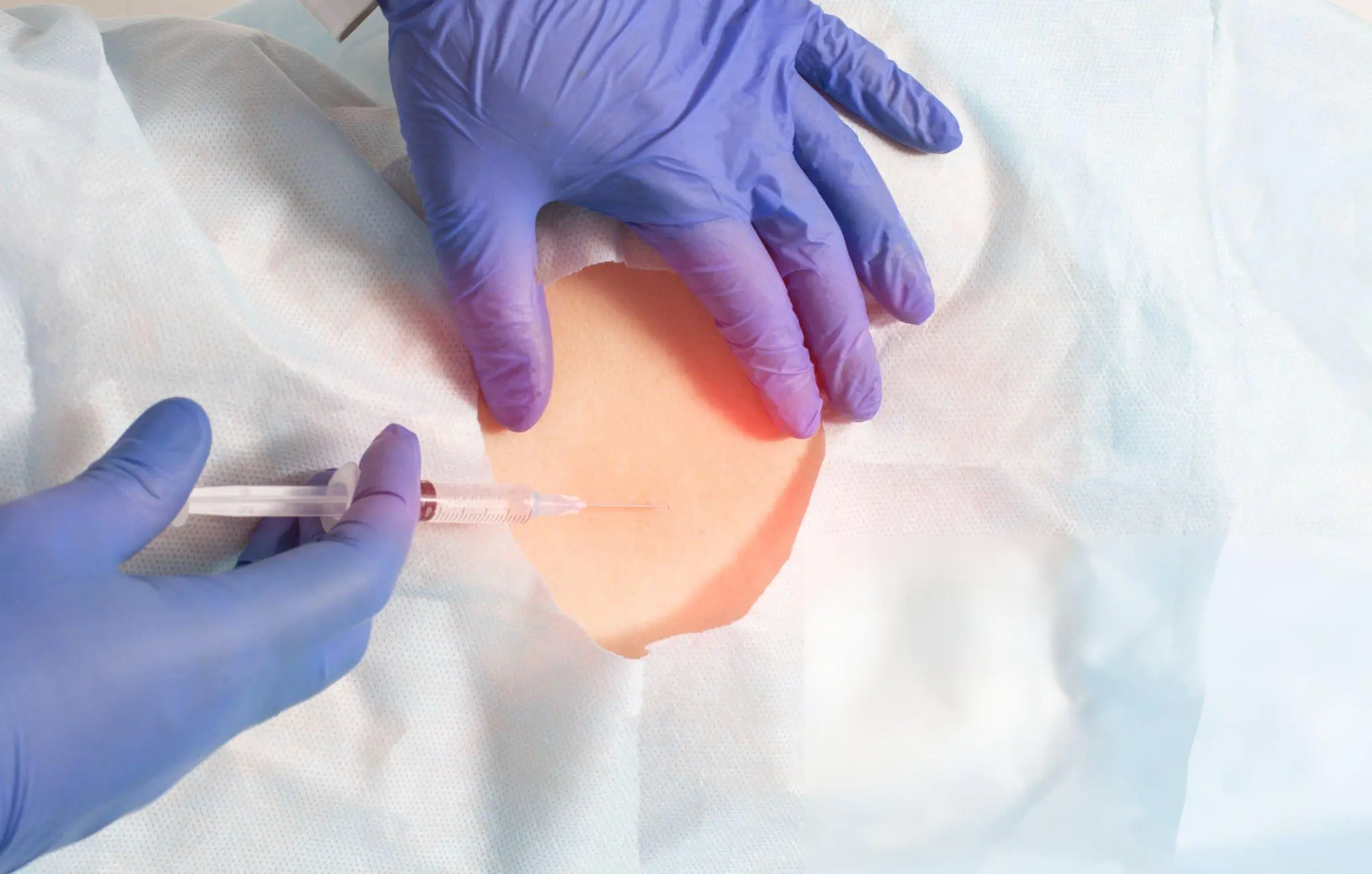
Injected directly into joints or soft tissues
Used for tendon, ligament, cartilage, and joint conditions
Can be administered intravenously in select clinical cases
Some newer formulations are shelf stable at room temperature. In these versions, the cells are no longer alive, but growth factors remain active.
Amniotic Membrane
Derived from the placenta and used for:
Chronic and diabetic wound care
Ophthalmologic injuries such as chemical burns
Surgical applications to reduce scar tissue
Tendon, ligament, and spinal surgeries
Placement around the spinal cord to reduce post-surgical adhesions
Medical Conditions Treated With Amniotic Fluid Therapy
Musculoskeletal Conditions
Osteoarthritis
Post-traumatic arthritis
Rheumatoid arthritis
Degenerative disc disease
Tendon and ligament injuries
Rotator cuff injuries
Tennis elbow and golfer’s elbow
Plantar fasciitis
Bursitis and spinal arthritis
Wound Care and Surgical Applications
Non-healing diabetic ulcers
Crush injuries
Fracture healing
Scar tissue prevention
Spinal surgery support
Ophthalmologic applications
Additional Clinical Uses
Limb salvage
Cosmetic and plastic surgery applications
Select neurologic, metabolic, and systemic conditions via IV administration
Clinical partner data has reported approximately 85-90%excellent outcomes in many musculoskeletal applications.
FDA Regulation and Legal Status
Amniotic fluid is not FDA approved nor FDA disapproved because it is not classified as a drug.
Instead, it is regulated as a biologic allograft under current good tissue practice regulations. These rules govern how the tissue is collected, processed, tested, stored, and distributed.
Clinical Outcomes and Research
Research on amniotic fluid is strongest in wound healing.
Ongoing research also explores long term applications, including future cell banking and expanded regenerative uses.
Insurance Coverage
In most cases:
Amniotic fluid injections are not covered by insurance
Office visits, imaging, and lab work are often covered
When used during surgery, amniotic tissue may be reimbursed as an allograft
Coverage policies continue to evolve as clinical data expands.
Conclusion
Amniotic fluid stem cell therapy offers a unique combination of regenerative potential, safety, ethical sourcing, and clinical versatility. Its rich growth factor content, multipotent stem cells, and low risk profile make it an increasingly valuable option for patients seeking alternatives to surgery or long term steroid use.