
The US Leader in Stem Cell Therapy, Now in Mexico. Treatments start at $3750 for 25 million stem cells!
Special Promo: Get an additional 25 BILLION Exosomes IV with treatments over 50 million cells!”
The US Leader in Stem Cell Therapy, Now in Mexico. Affordable treatments start at $3750 for 25 million stem cells!
Special Promo: Get an additional 25 BILLION Exosomes IV with treatments over 50 million cells!”
Written by Dr. David Greene, MD, PhD, MBA on December 3, 2025
Yes, Peyton Manning did receive stem cell therapy for his neck injury, but the story is more nuanced than a simple “yes” or “no.” As a doctor who has followed regenerative medicine for years, and who still gets questions about “the Peyton Manning treatment” in the clinic, this case is a good way to explain what stem cell therapy can and cannot do.
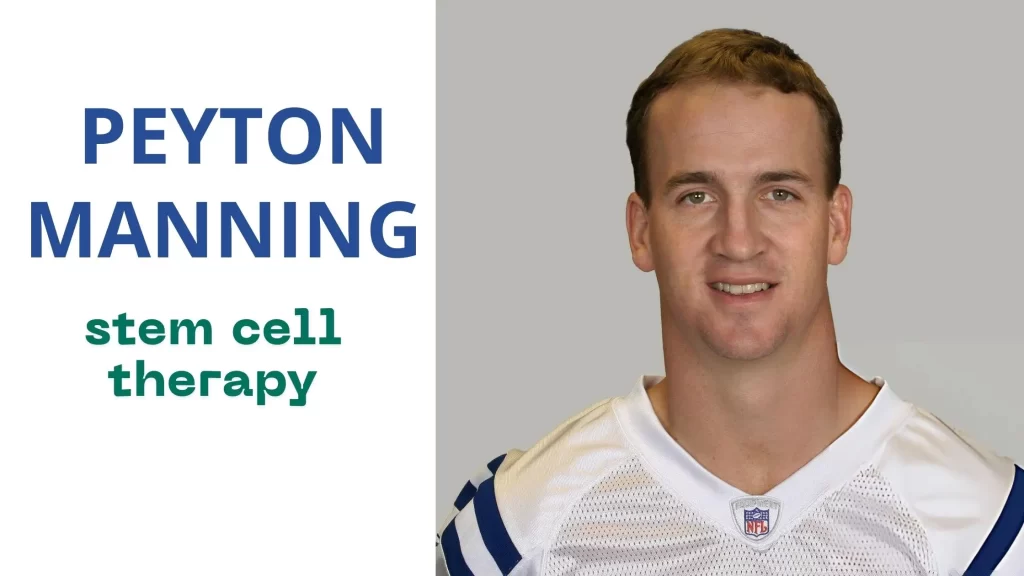
Back in 2011, Peyton Manning was dealing with a serious cervical spine problem after multiple neck surgeries and ongoing nerve issues in his throwing arm. Reports from major outlets at the time said he flew to Europe for an experimental stem cell procedure that was not approved in the United States.
The treatment, based on those reports, involved using his own cells, often described as adult stem cells or cells derived from his fat, processed and then injected into his neck in an attempt to support healing of damaged tissue. He later returned to the U.S. and still required another neck surgery, which tells you right away that this was not a magic fix.
This is the question fans love to ask…. and the honest answer is: no one can say for sure.
In other words, the treatment might have helped, or it might have had little or no clinical effect. From a medical standpoint, it remains an anecdote, not solid evidence.
This is where many people get confused. Stem cell therapy is not one single thing.
So yes, it was a stem cell–type therapy, but not an FDA‑approved standard of care for neck injuries. Even now, many orthopedic stem cell and “regenerative” injections for spine, joints, and tendons are still offered under varying regulations or research frameworks, not as fully approved cures.
At that time, U.S. rules did not allow certain cell culture and manipulation techniques outside of tightly controlled trials. Clinics in parts of Europe were more willing to offer procedures that American authorities considered experimental, especially for high‑profile athletes willing to pay for private treatment.
Doctors in the field were split:
As a physician, that concern still stands today: location and branding do not equal safety or evidence.
Even though the outcome of his individual treatment is unclear, Manning’s story did something important: it pulled stem cell therapy into mainstream conversation. Fans, journalists, and, yes, many patients started asking whether similar treatments could help arthritis, knee injuries, back pain, and more.
Since then:
Peyton’s story, fair or not, became a reference point people use when they think about “regenerative medicine.”
Here is the part that matters to you, not just to NFL history. If you are reading this because your neck, knee, or back hurts and you are tired of pills and repeat surgery talk, Peyton Manning’s experience should teach three key lessons:
If you ever consider this type of care, ask direct questions:
You deserve clear answers, in simple language.
| Aspect | Peyton Manning (2011) | Current best practice for patients |
|---|---|---|
| Injury | Cervical spine and neck issues in an NFL quarterback. | Wide range including arthritis, disc problems, and sports injuries with varying levels of evidence. |
| Therapy type | Experimental adult cell procedure abroad, not FDA approved for that use. | Mixture of approved blood stem cell transplants, regulated trials, and private clinics with variable standards. |
| Outcome | Returned to play after further surgery and rehab; role of stem cells uncertain. | Outcomes vary by diagnosis, technique, and center. Some benefit, others see limited change. |
| Key lesson | High hope and limited proof with strong media attention. | Ask for evidence, safety data, and realistic expectations. |
In my own work with patients, now based with R3 Stem Cell Mexico, the focus is on staying honest about what regenerative medicine can offer, and what it cannot. That means clear diagnosis, careful use of cell‑based procedures where there is reasonable support, and detailed conversations about risk, cost, and expectations—without hiding behind famous names.
So yes, Peyton Manning did have stem cell therapy…. but the real question for you is different: Is there a safe, science‑based option that fits your body, your condition, and your goals right now? That is the conversation that matters, and it should always start with straight talk, not hype.
Contact US
Dr. David Greene
MD, PhD, MBA
Dr. David Greene, MD, PhD, MBA, is a pioneering leader in regenerative medicine and healthcare marketing. As a residency and fellowship-trained orthopedic surgeon, Dr. Greene transitioned from clinical practice to become the founder and CEO of R3 Stem Cell and US Lead Network, where he has revolutionized patient care and medical practice growth through innovative therapies and digital marketing strategies. He has authored two influential books on healthcare internet marketing, ranks among the top expert authors globally, and has been featured on the cover of Corporate Vision magazine for his impact on global regenerative therapies. Beyond his professional achievements, Dr. Greene is passionate about education, compassion, and continuous innovation.